
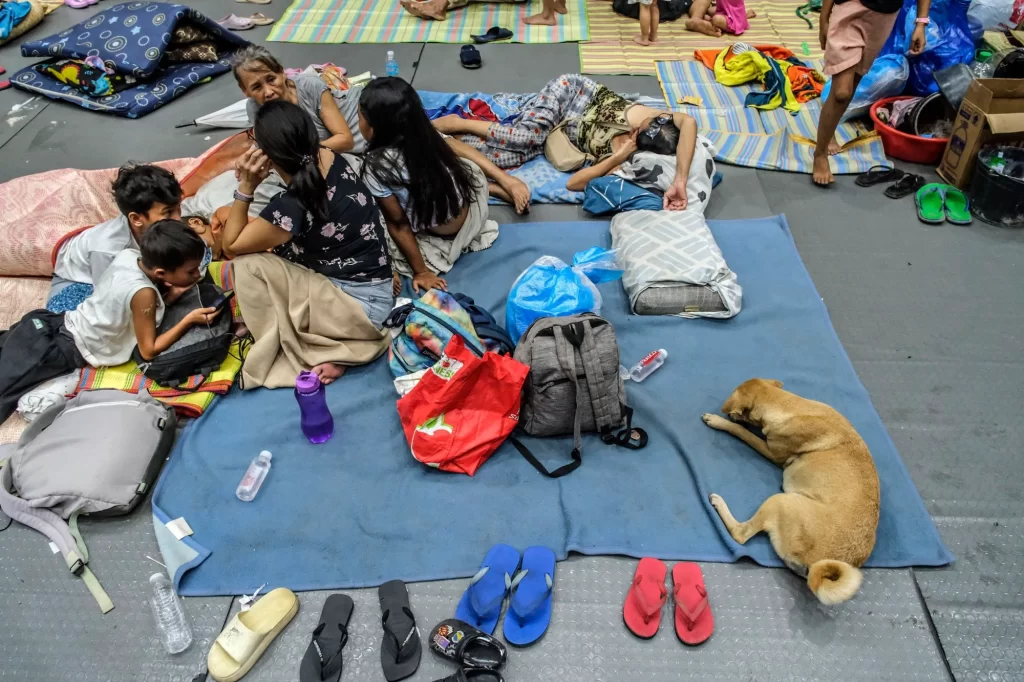
Torrential winds. Smashed homes. Power blackouts and stranded communities. The Philippines is in full recovery mode after Typhoon Kalmaegi (international name) — locally “Tino” — swept through the Visayas and parts of Luzon, leaving a trail of destruction and prompting urgent responses from government agencies and local units.
What happened
- Typhoon Kalmaegi caused extensive damage in the Philippines; at least 188 people have died in the country and five more in Vietnam as the storm moved through Southeast Asia. Reuters
- In the Philippines, the government has declared a state of national calamity following the storm’s onslaught. Wikipedia+2Philippine News Agency+2
- The storm also exposed the changing face of tropical cyclones: scientists warn that warmer seas driven by climate change are contributing to stronger, wetter storms such as Kalmaegi. Reuters
The human & infrastructure toll
Communities in the Visayas region, especially in Cebu, saw massive damage:
- Homes and bridges collapsed; the Mananga Bridge in Talisay City, Cebu, was heavily damaged and inspected by Ferdinand R. Marcos Jr. himself. Philippine News Agency
- Power restoration is ongoing; as of November 7, over 1.3 million households in the Visayas remained without electricity. ABS-CBN+1
- The government implemented a 60‑day nationwide price freeze on basic goods to protect consumers amid the calamity. Philippine News Agency
- Ahead of another possible incoming storm (named “Uwan” by meteorologists), health supplies worth over ₱10 million were pre‑positioned in Luzon. Philippine News Agency+1
Government response and preparedness
The government is doing more than repair — it is preparing for what could come next:
- President Marcos ordered accelerated aid distribution and relief efforts to Tino‑hit areas. Philippine News Agency+1
- Agencies such as the Department of Social Welfare and Development (DSWD) and the Department of Labor and Employment (DOLE) are profiling displaced workers, assessing damage, and coordinating recovery. Philippine News Agency
- Prior to the arrival of Typhoon Uwan, the Philippine Atmospheric, Geophysical and Astronomical Services Administration (PAGASA)‑advised areas are on high alert, and local government units have been instructed to execute pre‑emptive measures. U.S. Embassy in the Philippines+1
Why it matters
- Climate risk is real — Kalmaegi illustrates how storms are becoming more intense thanks to warmer ocean temperatures and higher moisture content. The Philippines, as an archipelagic and low‑lying country, is particularly vulnerable. Reuters
- Recovery intersects with resilience — This isn’t just about rebuilding what was lost; it’s about strengthening infrastructure, power grids, bridges, and evacuation systems to withstand future events.
- Socio‑economic impacts ripple outward — The destruction affects not only homes and roads but livelihoods, food supply (agriculture/fisheries), and household budgets (hence the price freeze).
- Preparedness can save lives — The move to pre‑position supplies and alert LGUs ahead of storm Uwan shows a shift from reactive to proactive disaster management.
What comes next
- Monitoring of storm Uwan (or whatever its final local name will be) is critical. Communities in likely path areas must remain vigilant.
- Recovery efforts in Visayas will need sustained funding and coordination; now is the window to invest in resilient infrastructure rather than simply patching.
- Government and private sector must collaborate on early warning systems, power grid redundancy, and safe evacuation shelters.
- Citizens should stay informed: track weather bulletins, heed evacuation orders, safeguard vital documents and have emergency kits ready.
Bottom line
Typhoon Kalmaegi laid bare the vulnerability of the Philippines to escalating climate‑driven events. But it also provided a wake‑up call: recovery must go hand in hand with long‑term resilience. The work now is not just rebuilding — it’s future‑proofing.