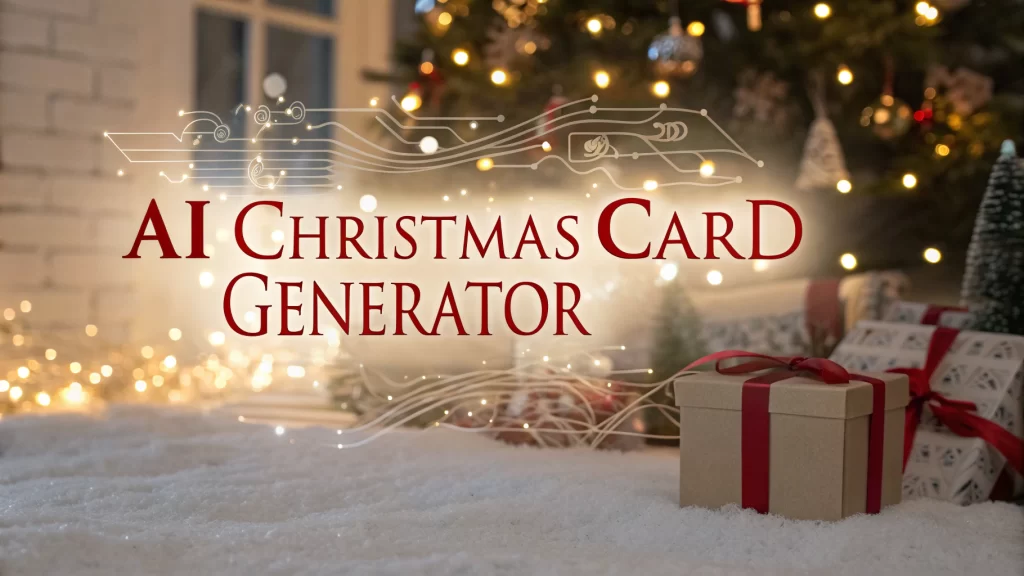
In homes, offices, and group chats across the country, one unexpected star is quietly owning the 2025 holiday season: AI-generated Christmas greeting cards. What used to be an annual scramble to buy cards at bookstores—or a last-minute Canva rush—is now a seamless ritual powered by image models, personalization engines, and text generators that can match tone, emotion, and even Filipino cultural nuances at the click of a button.
This shift did not happen overnight. Over the past two years, AI image and text tools have matured enough to create artwork that looks handcrafted, layouts that feel professionally designed, and messages that read like they were written by someone who knows you well. From hyper-realistic Christmas village scenes to watercolor-style parols and jeepneys, AI has enabled Filipinos to create cards that are not only beautiful but surprisingly personal.
Filipinos are, by nature, sentimental gift-givers. That’s one reason the Christmas card tradition has remained strong despite the rise of digital messaging. But what AI adds is a new level of customization. People don’t just send a card—they send a card that reflects their personality, humor, aesthetic, or inside jokes. And for many, that’s the modern equivalent of handwriting a note on specialty paper.
One major driver of this trend is the rise of easy-to-use online platforms built specifically for holiday card creation. Apps like Packify, MewTruCard, and Fotor have become popular options for producing personalized Christmas greetings with minimal effort. Packify lets users “chat” their way to a finished design using simple prompts. MewTruCard focuses on creating fully AI-generated holiday cards—both static and animated—based on user preferences. Meanwhile, Fotor offers a wide range of AI-assisted holiday templates that allow users to build stylized cards or transform uploaded photos into festive layouts. These platforms make the process fast and intuitive, even for people with no design background.
Accessibility is another factor pushing AI Christmas cards into the mainstream. Free and user-friendly AI design tools are embedded everywhere—messaging apps, phone photo editors, browsers, and social platforms. A student can generate a card featuring their barkada inside a snow globe. A small business can create branded holiday cards that match their marketing. Families abroad can generate OFW-themed greetings that reflect their real-life traditions.
AI also removes the barriers people used to face with traditional design platforms. Instead of manually arranging elements or learning color theory, users can describe what they want—perhaps a Filipino-style Christmas dinner illustrated in a watercolor finish—and the system generates multiple versions instantly. If adjustments are needed, prompts can be refined. This “describe and create” workflow has opened the door for more people to express creativity during the holidays.
Cultural representation is another major reason AI cards have gained traction. Filipino imagery has often been lacking in mainstream holiday card collections, especially those sold abroad. Today, users can create illustrations that reflect simbang gabi, noche buena tables, parols lining the streets, or families celebrating in typical Filipino homes. These visuals feel authentic and speak directly to the experiences of Filipinos.
There are, however, ongoing conversations about accuracy and ethics, especially when religious symbols are involved or when AI tools replicate certain artistic styles too closely. More users are learning how to choose platforms that follow ethical guidelines and offer clear attribution policies. But for most, the convenience and creative freedom remain the bigger draw.
People who used to spend hours designing cards now produce polished images in minutes. Those who relied on mass-produced boxed sets are experimenting with custom styles. Even businesses are jumping in—sending branded greetings to clients or using AI-generated assets for email campaigns and social content.
Perhaps the most surprising shift is how AI-generated cards are no longer seen as less sincere. Recipients often say they appreciate the sentiment behind a personalized AI-created design, especially when it reflects shared memories or the sender’s personality. A digitally generated card that captures a family joke or a favorite holiday tradition can feel more meaningful than a store-bought print.
With AI features now built into everyday devices and creative apps, the line between casual user and designer continues to blur. And if this year’s surge is any indication, Filipinos can expect future holiday seasons to feature even more personalized, culturally grounded, and visually creative greeting cards.
For now, one thing is clear: in 2025, AI-generated Merry Christmas cards aren’t just a digital trend. They’re becoming a new Filipino tradition.