As a subgenre of travel vlogs, vlogs like this one by SEFTV that make use of a follow-me-around vlogging style, which can be further subcategorized into vlogs that feature impoverished, dangerous, and remote places not frequented by the garden variety tourists, allow viewers a peek into the lives of people in locations that they would not otherwise visit.
These places are not advertised by private and state-owned tourism agencies to both domestic and foreign visitors because, though they may offer adventure and a semblance of “conquering the other,” these agencies are not able to guarantee the overall safety, clean and quiet accommodations, and a uniform delightful experience that a popular and well-beaten tourist trap can.
For 15 minutes of drone- and eye-level shots and narration that feel raw and scripted at the same time, viewers of this vlog by SEFTV who have time to spare can see unraveling before their eyes lives of people who may reside within close proximity to where they are but whose lived existence is a world apart from theirs.
Unlike many vlogs belonging to this same subgenre produced by foreign content creators that often frame these places as dangerous, pitiable, even somewhat romantic to a degree, and exotic, this vlog was made by a Filipino by the name of Joseph Pasalo of SEFTV and its perspective, though that of palpable realism, is kind, sympathetic, and even optimistic.
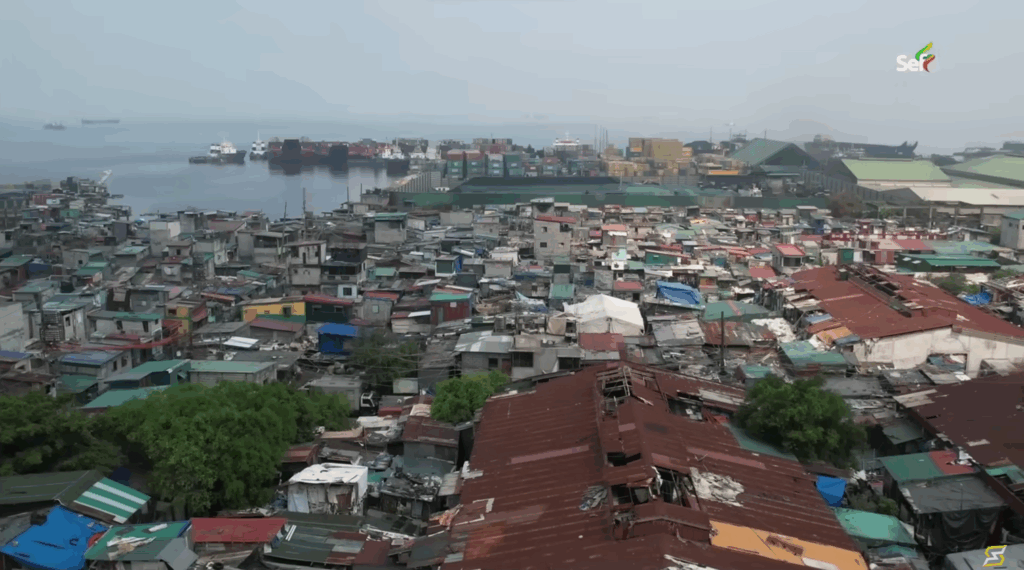
It opens with a bird’s eye view rendering of the community, giving the target Filipino viewers a sense of where the place is located relative to the other landmarks of Manila, the Manila North Harbor most prominently, and its size—Pasalo compared the land area of Happyland to the size of the plot of land in Mandaluyong where Megamall is situated, which measures a mere 10 hectares.
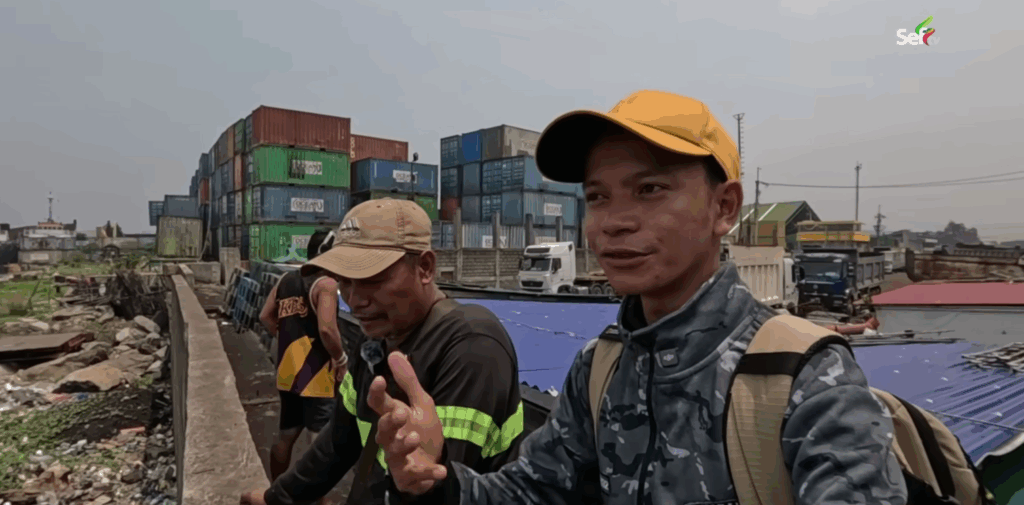
This initial scene then moves to the part where the vlogger exits a dark alleyway, trailing his guide, Sir Marlon, who politely tells a bystander, in Hiligaynon, “Agi lang kami ah” (Please excuse us, we’re just passing through).
This situates solidly the positionality of the vlog and the vlogger, Pasalo, who, though not exactly an insider, is also not thoroughly an outsider. His accent is clearly Bisaya, and somewhere in the middle of the vlog, he declares to a man he is interviewing that he himself was also born and raised in Leyte.
The vlog enumerated the obvious problems that hound the residents of Happyland—population explosion and extremely high population density (20,000 to 40,000 people have to cram themselves in a space that’s only the size of a tiny city block; this is equivalent to 2.5 to 5 square meters of space for every person!), criminality (Happyland was a dumping place for dead or “salvaged” bodies who were victims of summary executions).
It was rife with gang activities. Drug use and trade were rampant. Illegal activities abound. Still, the vlog honestly and compassionately captured the traits of tenacity, drive, and optimism of the people living in this informal community.
The people in Happyland embody the very concept of diskarte—the trait that roughly, though not completely, translates to English words like resourcefulness, ingenuity, and clever strategy. Indeed, the vlog is replete with instances of these attributes.
This diskarte is made visible in the livelihoods of the people, their homes and places of dwelling, and their expression of pakikisama with their neighbors and strangers.
Biyaya ang basura (Trash is a blessing)
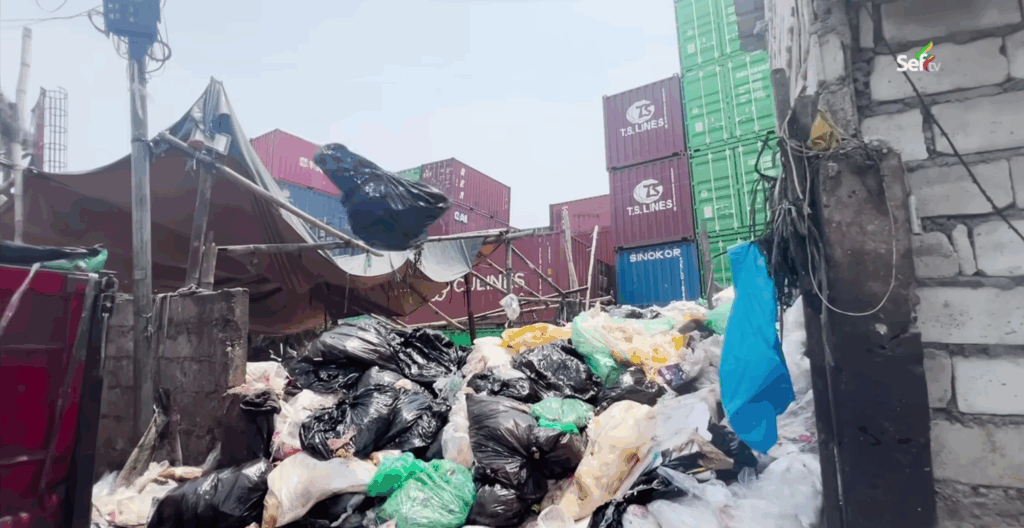
The bulk of the employment found within Happyland is trash collection and the steps that are involved after garbage is collected from within the nation’s capital city and nearby cities.
Plastic containers are classified, cleaned, and weighed to be sold to recycling factories, with each type of plastic selling at a certain price.
Happyland and places similar to it (Payatas and Baseco) are the reasons Metro Manila does not drown in the waste its 13.4 million residents (as of 2020 [Philippine Statistics Authority, 2021]) produce in a single day, and one can only appreciate this fact if he or she understands the long chain of processes and the people (often from the informal economy) that are needed in order to keep the city sanitary, organized, and, ultimately, livable.
Without places like Happyland, it is highly doubtful upmarket commercial districts like BGC, Eastwood, Greenfield, Ortigas, and Ayala can exist in the way people recognize them today.
Zooming closely in on a place like Happyland, one will bear witness to the significant contribution of hardworking informal workers to the overall success of the city.
These workers eke out legal, though often looked down upon, livelihood from trash and refuse that would otherwise litter Metro Manila should these workers decide to stop taking these mountains of garbage in.
Pantawid-gutom (Tiding hunger over)
Though considered by many as an extreme symbol of poverty and a quick (albeit unhygienic) solution to hunger and food insecurity borne out of desperation and misery, people in Happyland see the selling and consumption of pagpag as a commonsense and rational response to scarcity, the government’s abandonment of its responsibilities to its people, and the availability of a resource that will just go to waste if not properly utilized (chicken scraps collected at the day’s end from nearby fast food chains like Jollibee and Mang Inasal).
Business-minded women see the need for cheap, delicious, and accessible food; they also see the volume of food that is not spoiled but is thrown away as waste.
And the confluence of necessity and opportunity is pagpag.
This is the way members of the informal sector attempt to make sense of their present reality and find ways, dumiskarte, to reconcile themselves with their situation.
‘Ganun talaga kapag squatter’ (It’s expected of a house in a squatters’ area)
Another area of their lives where this diskarte is made evident is their home and how this home is abstracted and made concrete.
The structure of the home, though pastiche-like, its parts made from light and discarded materials, is carefully thought out and creatively configured to meet the specific needs of every member of the family that lives inside.
In Sir Marlon’s house the line that separates the living room and the kitchen is blurred because the functions of these supposedly discrete spaces are also constantly negotiated by the members depending on the time of the day and the specific need of the moment.
Because space is a premium resource, every space available is utilized with deliberativeness and intentionality.
In some measure, the number of stories a family is able to afford to build on top of the existing ground floor indicates the extent of their financial capacity, but more than this, it’s an indicator of the magnitude of their dream and the breadth of their entrepreneurial spirit and resourcefulness.
The house where Sir Marlon, the tricycle driver and guide, lives with his family of 10 is centered around a space that gets the optimal reach of the sun—this house makes up a “compound” that is comprised of houses that obscure the distinction between makeshift and permanent, owned by people who are related to each other or whom they do not share any blood relation with, but with whom they may have spent a substantial amount of time together, faced similar or collective challenges, and whose children grew up together with Sir Marlon’s.
This compound is a source of not only a sense of community, a feeling that one is part of a group, but provides a source of security in moments of uncertainty, precarity, or catastrophe.
As such, one cannot afford not to have pakikisama as the cost of its absence, for people in a state of informality, can be very high.
Saan patungo ang Happyland? (What does the future hold for Happyland?)
These are the various manifestations of informality in Happyland, and this condition of informality determines the modes of diskarte the residents of Happyland employ in order to raise their family with dignity, build a safe and welcoming community, and claim a part of the city that they can truly claim ownership over.
Primarily, the more long-term solution to the challenges faced by the residents of Happyland in Tondo, Manila is the provision of legal land title to the plots of land that their houses are currently occupying illegally.
This legalization of their claim over the land is in recognition for the number of years that they have inhabited the site, the development that they have introduced, and for their important contribution to the vibrant economic activities and progress of the city in general.
However, this is not enough.
In addition to this permanent solution, the local government of Manila needs to build protective structures that will shelter Happyland and its people from strong waves and flooding caused by annual typhoons that hit the area.
For years, this vulnerability to calamities, given the location of the community, has gotten in the way of the many attempts of its residents to escape poverty.
On top of all these, basic government services like education, healthcare, public safety, and essential infrastructures like water and sanitation need to be mainstreamed in Happyland.
On the part of the civil society and NGOs, these organizations need to be catalysts in empowering the residents by training them in community organizing and livelihood development—this will lead to two things: formalizing the already in-place but improvised system of government and increasing the capacities of the residents to recognize opportunities and eventually expanding the available job prospects that will give Happyland residents options aside from those that are available at the moment.
And for the residents themselves, for years, they have worked tirelessly to keep their community subsist through their employment of strategies and clever means to survive on a daily basis, but they need to demand for and/or pave a path toward security for themselves, their families, and the community they have built.
They can minimize their vulnerabilities through their gradual participation and membership in the formal sector and becoming active citizens of the nation.
The residents of Happyland have to acknowledge and claim their important contribution to the city and leverage this role to demand from the government that they be given their legal rights and be recognized as legitimate participants in nation-building.
References:
Philippine Statistics Authority. (2020). Census of population. “National Capital Region (NCR)”. Accessed on 30 May 2025. https://psa.gov.ph/content/highlights-national-capital-region-ncr-population-2020-census-population-and-housing-2020.
SEFTV. (2024 June 20). I visited one of the most dangerous slum in the Philippines. [Video]. https://www.youtube.com/watch?v=UT0Mb38GS8M.
(John Ryan Recabar does research on Southeast Asia, specifically Vietnam, and he hopes to re-sharpen his skills in the Vietnamese language. He has also begun his research on the informal economy and the indigenous cultures and peoples in southern Mindanao as he completes his PhD in Anthropology at the University of the Philippines Diliman. In his free time, he walks his dogs and feeds stray cats at a nearby park.)