Last updated: June 2026
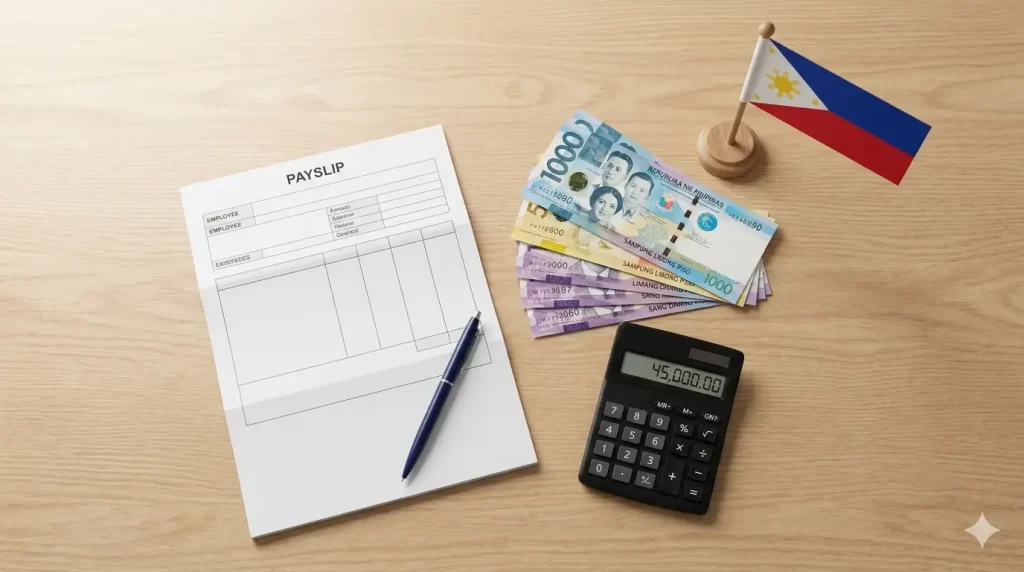
Before June 12 arrives, there is one question every working Filipino should be able to answer: Am I being paid correctly?
June 12, 2026 — the 128th Araw ng Kalayaan — is a regular national holiday. That single classification carries real peso value, and knowing the rules means the difference between accepting a short paycheck and asserting your legal rights.
This guide covers every scenario clearly, with no HR jargon and no guesswork.
Regular Holiday: What It Actually Means for Your Pay
Not all Philippine holidays are equal. June 12 is a regular national holiday — the highest holiday classification under the Labor Code. This is not a special non-working holiday.
Here is why that matters:
| Regular Holiday | Special Non-Working Holiday | |
|---|---|---|
| Did not work | Paid — 100% of daily rate | No work, no pay (general rule) |
| Worked | 200% of daily rate | 130% of daily rate |
On a regular holiday, your employer cannot withhold your pay simply because the office was closed. If you were present — or on authorized leave — the day before, you are entitled to your full daily wage.
Who Qualifies for Holiday Pay
The following private sector employees are covered under Article 94 of the Philippine Labor Code:
- Rank-and-file employees in the private sector
- Part-time employees with fixed hours
- Employees on authorized leave on the day preceding the holiday
The following are generally not covered:
- Government employees (governed by CSC rules)
- Managerial staff and supervisory employees
- Field personnel without fixed or measurable hours
- Workers paid purely on commission or boundary basis
- Kasambahay (domestic workers) — governed separately under the Kasambahay Law
If you are unsure of your classification, your employment contract or HR department is the first place to check.
Every Scenario, Clearly Computed
All examples below use a ₱800 daily rate (₱100 per hour).
You Did Not Work on June 12
You are on holiday. Your employer owes you your regular daily wage — no deductions.
₱800 × 100% = ₱800
You Worked on June 12 (First 8 Hours)
Your employer required you to report. You are entitled to double pay.
₱800 × 200% = ₱1,600
You Worked Overtime on June 12
Every hour beyond eight on a regular holiday earns an additional 30% on top of the 200% rate.
₱100 × 200% × 130% = ₱260 per overtime hour
Working 10 hours total on June 12:
- First 8 hours: ₱1,600
- 2 overtime hours: ₱520
- Total: ₱2,120
June 12 Falls on Your Rest Day — You Did Not Work
Same as the standard no-work scenario. The holiday pay applies regardless of your rest day schedule.
₱800 × 100% = ₱800
June 12 Falls on Your Rest Day — You Worked
This is the highest pay scenario in the Philippine holiday pay system.
₱800 × 260% = ₱2,080
June 12 Falls on Your Rest Day — You Worked Overtime
₱100 × 260% × 130% = ₱338 per overtime hour
Complete Rate Reference
| Scenario | Multiplier | Pay on ₱800 Daily Rate |
|---|---|---|
| Did not work | 100% | ₱800 |
| Worked — 8 hours | 200% | ₱1,600 |
| Worked — overtime (per hour) | 200% × 130% | ₱260 |
| Rest day, did not work | 100% | ₱800 |
| Rest day, worked — 8 hours | 260% | ₱2,080 |
| Rest day, worked — overtime (per hour) | 260% × 130% | ₱338 |
The Condition Most Employees Miss
To qualify for June 12 holiday pay, DOLE requires that you were present or on authorized leave on June 11, 2026 — the working day immediately before the holiday.
An unexcused absence on June 11 gives your employer legal grounds to withhold your June 12 holiday pay.
Authorized leave counts. Approved vacation leave, sick leave, maternity leave, and paternity leave on June 11 all protect your June 12 entitlement. Only an unexcused absence puts it at risk.
A Note for Monthly-Paid Employees
If you receive a fixed monthly salary, regular holidays are already factored into your pay. You will not receive an extra day’s pay just because June 12 is a holiday.
However, if your employer requires you to work on June 12, you are entitled to an additional 100% of your daily rate on top of your regular pay — bringing your total to 200% for that day.
To find your daily rate as a monthly-paid employee:
Monthly Rate ÷ 26 = Equivalent Daily Rate
If Your Employer Underpays You
Payroll errors happen — but so does deliberate underpayment. If your June 12 pay does not match what the law entitles you to, here are your options:
Step 1 — Raise it internally. Ask HR for a written breakdown of your holiday pay computation. Errors are often corrected at this stage without escalation.
Step 2 — File with DOLE. Submit a Request for Assistance through the Single Entry Approach (SEnA) at the nearest DOLE Regional or Field Office. SEnA is a 30-day mandatory conciliation-mediation process — it is free and accessible.
Step 3 — Call the DOLE Hotline. Dial 1349 for guidance on your rights and the correct process for your situation.
Step 4 — Visit DOLE online. Download complaint forms and read the latest labor advisories at www.dole.gov.ph.
Philippine labor law prohibits employer retaliation against employees who assert their rights. Filing a complaint does not put your job at risk under the law.
Frequently Asked Questions
Yes — employers can require employees to report on regular holidays. The obligation is on the employer to pay the correct rate, not to give the day off.
Only valid if covered by a written agreement or Collective Bargaining Agreement (CBA). Without one, DOLE’s standard holiday pay rules apply.
Yes. Regular holiday pay forms part of the base pay used to compute your 13th month pay.
Project-based employees covered by the Labor Code are generally entitled to holiday pay. Review your contract carefully and consult DOLE for contract-specific guidance.
Article 94 of the Philippine Labor Code, supported by annual DOLE Labor Advisories on the observance of holidays.
The Bottom Line
June 12 is more than a day off. It is a paid legal entitlement — and for employees required to work, it is one of the best-compensated days on the Philippine work calendar. Know your rate, check your payslip, and do not hesitate to raise a concern if the numbers do not add up.