
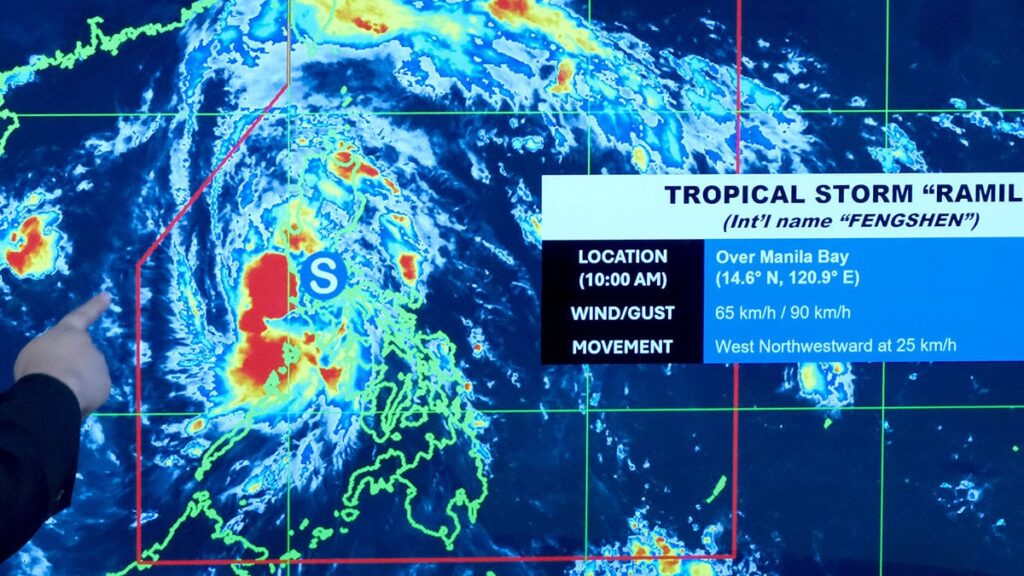
MANILA — Tropical Storm Fengshen (locally named Ramil) swept through northern and central parts of the Philippines over the weekend, leaving at least seven people dead, thousands displaced, and several towns under water as rescue teams raced to reach flood-hit communities.
(Associated Press)
The storm made landfall late Saturday, bringing winds of up to 65 kilometers per hour and gusts reaching 80 kph. As Fengshen crossed the central islands and moved toward the South China Sea, heavy rains triggered flash floods and landslides across several provinces.
Casualties and Damage
Officials reported that five people died in Quezon province after a massive palm tree fell on their hut during the height of the storm. Another fatality was recorded in Capiz, where flash floods swept through low-lying communities. In Batangas, a fisherman went missing after being caught by strong currents.
(Associated Press)
The National Disaster Risk Reduction and Management Council (NDRRMC) said over 22,000 people had been displaced, with more than 14,000 still in evacuation centers as of Monday. Many coastal areas remain inaccessible due to road damage and power outages.
Ongoing Warnings
The Philippine Atmospheric, Geophysical and Astronomical Services Administration (PAGASA) warned that scattered rain and thunderstorms will continue in northern Luzon even after the storm exits the country’s area of responsibility. Local authorities have been advised to stay on alert for possible landslides in mountain areas and rising river levels in flood-prone provinces.
(The Guardian)
Local Response
Disaster response teams have been deployed in Ilocos, Cagayan Valley, and Central Luzon, where several barangays remain submerged. Food packs, blankets, and water supplies are being distributed to affected families, while local governments have started clearing operations in areas hit by fallen trees and landslides.
In Capiz, residents were seen salvaging belongings from flooded homes. “We didn’t expect the water to rise that fast,” said one evacuee interviewed by local radio. “We just grabbed our kids and ran.”
Climate Concerns and Preparedness
This latest storm comes as the country faces more frequent and intense weather events linked to the climate crisis. Meteorologists note that warming seas have fueled stronger tropical systems across the Pacific, making each rainy season more dangerous for the Philippines — one of the most disaster-prone nations in the world.
Experts warn that stronger coordination between local governments and national agencies is needed to ensure faster disaster response and long-term adaptation plans for vulnerable regions.