
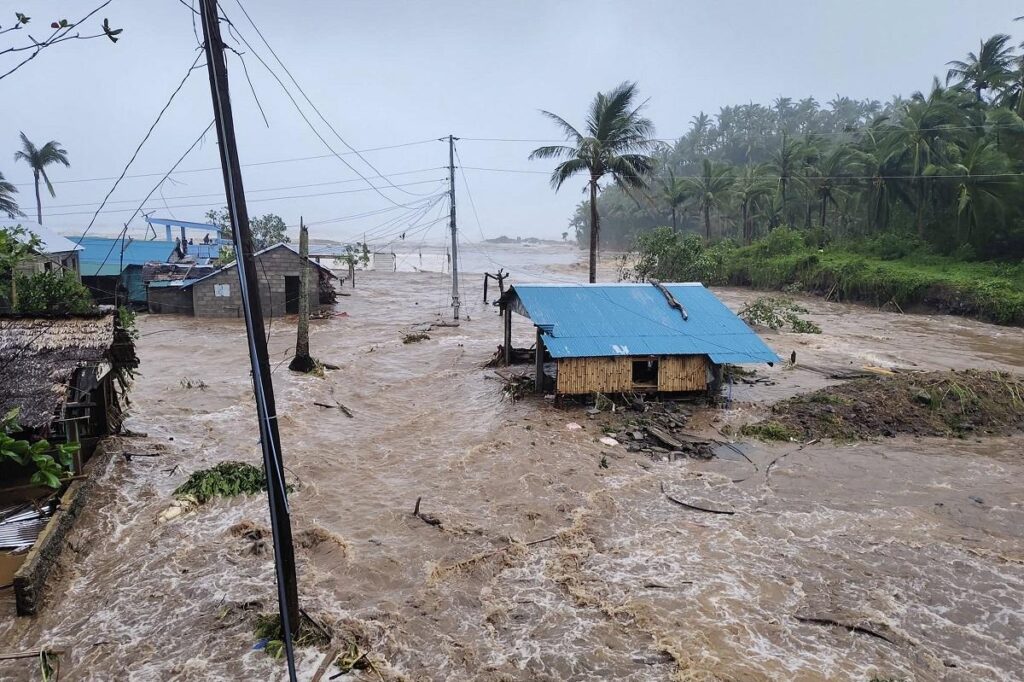
MANILA, Philippines — Typhoon Fung‑wong, locally known as “Uwan,” made landfall in Aurora province on November 9, 2025, unleashing sustained winds of around 185 km/h (115 mph) and gusts up to 230 km/h (143 mph). Classified as a super typhoon, Fung‑wong struck just days after Typhoon Kalmaegi, compounding the risk to already vulnerable communities.
The storm prompted the evacuation of over one million people, with families seeking shelter in evacuation centers across northern and eastern Luzon. As of the latest reports, at least ten fatalities have been recorded, while 1.4 million residents remain displaced due to flooding, landslides, and storm-damaged homes. Key provinces affected include Aurora, Catanduanes, Ifugao, and Nueva Vizcaya, where saturated soil from previous storms triggered deadly landslides.
Infrastructure and utilities also took a severe hit. Power outages are widespread, major roads and bridges are blocked or damaged, and many communication lines are down. Local authorities have warned that flooding and landslides may continue in mountainous and coastal areas even as the typhoon moves away.
The Philippines experiences frequent typhoons, but 2025 has been particularly active. Fung‑wong is the 21st named storm this year, highlighting concerns over climate change and stronger storms in the region. Scientists note that warmer sea-surface temperatures have contributed to more intense systems forming faster, presenting an ongoing challenge for disaster preparedness and response.
Government agencies are now focusing on relief, rescue, and rehabilitation efforts. Evacuation shelters are being restocked, and emergency personnel are mobilizing to restore power, repair roads, and deliver aid to isolated communities. Experts emphasize that back-to-back storms like Kalmaegi and Fung‑wong put enormous strain on resources and underscore the need for improved infrastructure resilience.
The typhoon is projected to continue toward Taiwan, where heavy rain and potential flooding are expected. Meanwhile, Philippine authorities are monitoring for secondary hazards, including flash floods and landslides, while recovery and damage assessments continue across Luzon.
Looking ahead, the Philippines faces a critical test of its disaster response and climate resilience. The human, economic, and infrastructural toll from Fung‑wong underscores the urgency of long-term adaptation strategies to mitigate the impact of increasingly intense typhoons.
Sources: The Guardian, Reuters, Al Jazeera