Noche Buena has long been one of the most anticipated parts of the Filipino holiday season. For many families, the late-night Christmas Eve meal is more than a feast — it is a moment that captures the warmth, togetherness, and cultural identity of Filipino Christmas. But the tradition has deeper roots that trace back centuries, shaped by Spanish influence, evolving local customs, and the Filipino emphasis on family.
Origins: A Tradition Introduced by Spain
The term “Noche Buena,” which translates to “Good Night” in Spanish, refers to Christmas Eve, the night associated with the birth of Jesus Christ. In Spain and other Hispanic countries, families would attend Midnight Mass and return home to share a celebratory meal.
When Spain colonized the Philippines in the 16th century, Catholic teachings and practices became central to local life. Along with them came customs like the Christmas Eve feast. Over time, Filipinos embraced the celebration and infused it with their own character, making the tradition more intimate and community-centered.
How Filipinos Adapted Noche Buena
By the 1800s, the sequence of Simbang Gabi, Misa de Gallo, and the Noche Buena meal had become firmly woven into Filipino Christmas observance. What made Noche Buena distinctly Filipino, however, was the emphasis on gathering the entire household — relatives returning home from different cities, extended families preparing food together, and neighbors sharing dishes across households.
The Feast Through the Years
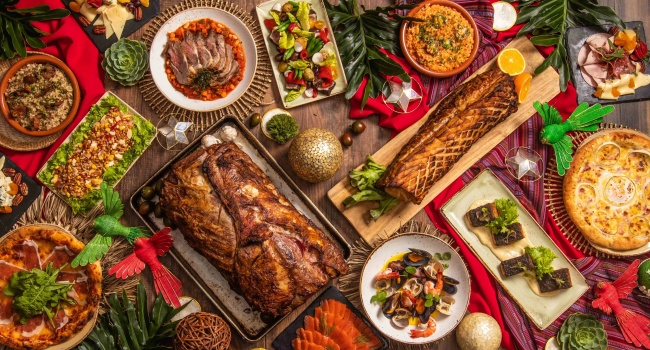
Noche Buena menus have shifted across generations. Early celebrations were influenced by Spanish cuisine, featuring dishes like embutido, lechon, and hot chocolate made from local cacao.
During the American period and the post-war years, new items entered the holiday table, including:
- Quezo de bola
- Hamón
- Spaghetti
- Fruit salad
- Leche flan
- Bibingka and puto bumbong
- Pancit and other noodle dishes
The result is a modern Noche Buena table that blends Spanish heritage, American influences, local ingredients, and Filipino culinary innovation. Each family has its own version of the tradition, making the celebration personal and familiar.
The Meaning Behind the Celebration
Beyond the food, Noche Buena evolved into a cultural anchor for Filipinos. It symbolizes family unity, generosity, gratitude, and continuity across generations. Even those living abroad recreate the tradition as a way to stay connected to home.
For children, it is a night of excitement; for adults, a time to pause, reconnect, and reflect on the year. For many families, it is the highlight of the holiday season.
Noche Buena Today
Despite changes in lifestyle and the influence of modern celebrations, Noche Buena remains a defining moment of the Filipino Christmas. Families continue to gather late into the evening, share meals prepared with care, and celebrate the season together regardless of circumstances.
In tracing the history of Noche Buena, one theme is clear: Filipinos took a practice introduced centuries ago and transformed it into a celebration that reflects who we are — a people anchored in family, community, and tradition.